
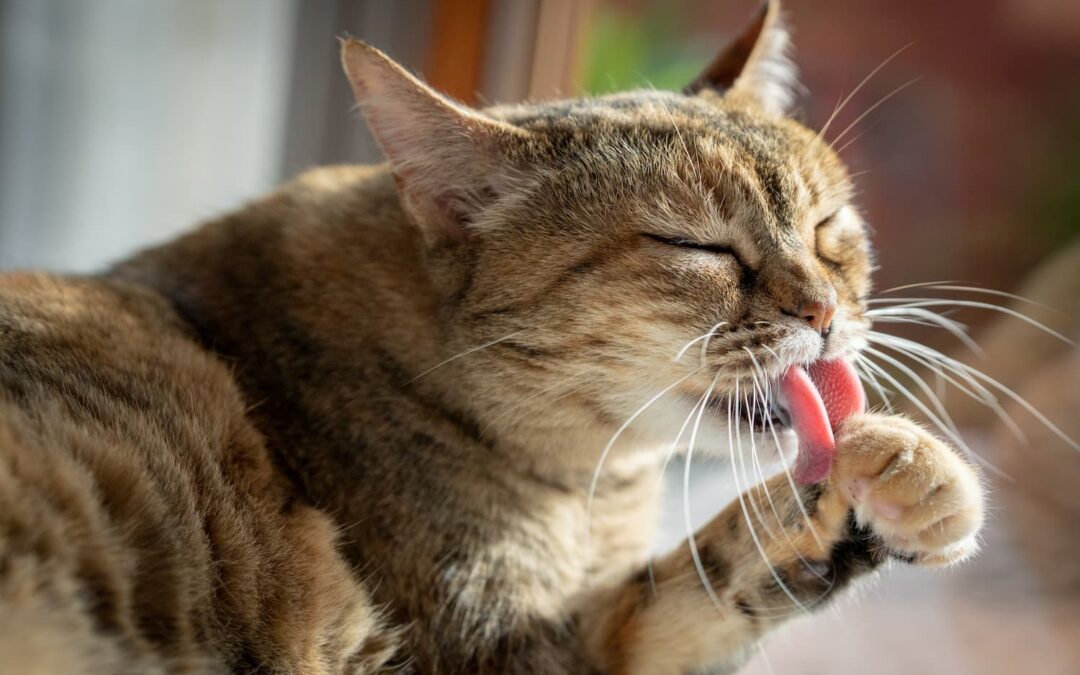
If you’ve noticed your cat constantly licking, scratching, or chewing at their skin, you’re probably wondering if it’s something to worry about. While cats are known for their grooming habits, excessive licking and scratching are often signs that something isn’t right. From fleas and allergies to skin infections and stress, several conditions can make your cat uncomfortable.
Knowing what to look for can help you get your cat the care they need before the problem becomes more serious. Here’s what may be causing your cat’s itchy skin and when it’s time to schedule a visit with our veterinary team.
How Much Grooming Is Normal for Cats?
Cats spend a significant part of their day grooming themselves. This natural behavior helps keep their coat clean, removes loose hair, and distributes healthy skin oils. Normal grooming should leave your cat with a clean, healthy-looking coat and comfortable skin.
Excessive grooming is different. If your cat seems to be licking the same area repeatedly or scratching throughout the day, it may be a sign of an underlying medical issue.
Watch for signs such as:
- Hair loss or thinning fur
- Red, irritated skin
- Scabs or sores
- Frequent scratching around the ears, neck, or back
- Overgrooming that leaves bald patches
- Increased restlessness or irritability
If you notice any of these symptoms, it’s a good idea to have your cat examined by our veterinarian.
Common Reasons Your Cat Keeps Licking and Scratching
Reason #1: Fleas and Other Parasites
One of the most common causes of cat itching is fleas. Even indoor cats can get fleas if the parasites are brought into the home on people, other pets, or wildlife. Just one or two flea bites can cause intense itching, especially in cats with flea allergy dermatitis.
Other parasites, including mites, can also lead to skin irritation, hair loss, and persistent scratching.
Keeping your cat on year-round flea prevention is one of the best ways to protect their skin and overall health. You can conveniently purchase veterinarian-recommended flea prevention through our online pharmacy.
Reason #2: Cat Allergies
Just like people, cats can develop allergies that affect their skin. Allergies are a common reason for excessive licking and scratching.
Common types of allergies include:
- Flea allergies
- Environmental allergies, such as pollen, mold, or dust mites
- Food allergies or food sensitivities
Cats with allergies may also develop recurring ear infections, skin infections, or inflamed skin. Since different allergies require different treatments, an accurate diagnosis is important for lasting relief.
Reason #3: Skin Infections
Frequent scratching and excessive licking can irritate and damage your cat’s skin, making it easier for bacteria or yeast to grow. In many cases, these infections develop because an underlying problem, such as allergies or parasites, has already weakened the skin’s protective barrier.
Signs of a skin infection may include redness, unpleasant odor, scabs, crusting, or moist areas on the skin. Prompt treatment helps prevent the infection from becoming more severe.
Reason #4: Dry Skin
Dry skin can make your cat itchy, particularly during the colder months when indoor heating reduces humidity. Poor nutrition, dehydration, or certain medical conditions may also contribute to dry, flaky skin.
While moisturizing products marketed for pets may seem appealing, it’s important to have our veterinarian determine whether dry skin is truly the cause before starting treatment.
Reason #5: Pain or Stress
Not all excessive licking is caused by itchy skin. Cats sometimes lick areas that are painful due to arthritis, injuries, or other medical conditions. Others may overgroom because of stress or anxiety.
Changes such as moving, introducing a new pet, home renovations, or disruptions to a routine can sometimes trigger stress-related grooming behaviors. If medical causes are ruled out, our veterinary team can recommend ways to help reduce stress and improve your cat’s comfort.
When Should You Take Your Cat to the Veterinarian?
Occasional scratching is perfectly normal, but ongoing itching deserves attention.
Schedule an appointment if your cat has:
- Persistent licking or scratching
- Bald patches or excessive hair loss
- Red, inflamed, or bleeding skin
- Scabs, sores, or skin odor
- Frequent ear scratching or head shaking
- Changes in behavior, appetite, or activity level
- Symptoms that continue despite flea prevention
Early evaluation often makes treatment simpler and helps your cat feel better sooner.
How Our Veterinarian Diagnoses the Cause
Finding the source of your cat’s itching starts with a thorough physical examination. Our veterinarian will examine your cat’s skin, coat, and ears while discussing when the symptoms started and whether they’ve changed over time.
Depending on the findings, diagnostic testing may include:
- A flea comb examination
- Skin scrapings to check for parasites
- Ear cytology
- Skin cytology to identify bacteria or yeast
- Allergy evaluation
- Additional laboratory testing if an underlying health condition is suspected
Because many skin conditions have similar symptoms, diagnostic testing helps ensure your cat receives the most appropriate treatment.
Treatment Options for an Itchy Cat
Treatment depends on the underlying cause of your cat’s symptoms.
Your cat’s treatment plan may include:
- Prescription flea and parasite prevention
- Medications to reduce itching and inflammation
- Antibiotics or antifungal medications for skin infections
- Dietary trials for suspected food allergies
- Stress management strategies
- Nutritional support for healthy skin and coat
It’s best to avoid over-the-counter products or home remedies without guidance from our veterinarian, as some ingredients can be ineffective or even harmful to cats.
Help Your Cat Feel Comfortable Again
Watching your cat struggle with constant itching can be frustrating, but relief is often possible once the underlying cause is identified. Whether the problem is fleas, allergies, an infection, or another medical condition, early care can help prevent discomfort from getting worse.
If your cat keeps licking and scratching, our veterinary team at Cloquet Animal Hospital is here to help. We will work with you to identify the cause and recommend a treatment plan that helps your cat feel comfortable again.
To schedule an appointment, call (218) 879-9280 or request an appointment online.
Looking for trusted flea prevention and other veterinarian-recommended products? Visit our online pharmacy.
Image credit: Envato